The Human Element of AI: Why Your Personality Dictates Your Workflow
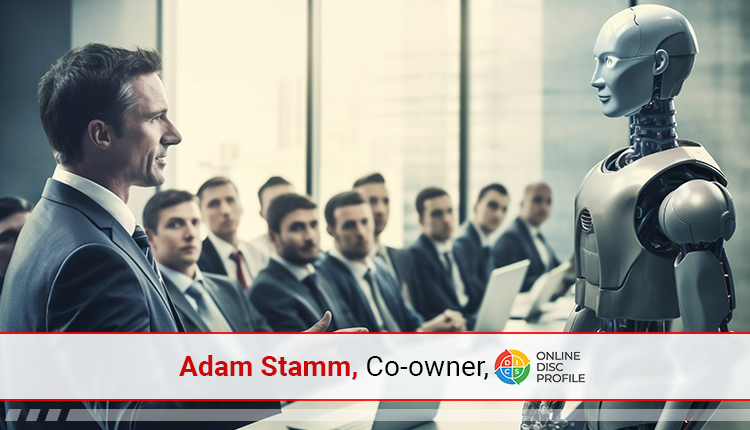
As the co-owner of Online DISC Profile, I’ve spent my career analyzing the differences in how people work, communicate, and even act in relationships. Recently, we surveyed over 4,000 people to understand a new factor in how people act in the workplace: AI.
The results were eye-opening. While a staggering 76% of employees are comfortable using AI at work, the way they interact with these tools isn’t a “one-size-fits-all” scenario. In fact, people’s DISC personality type (Dominant, Influence, Steadiness, or Conscientious) is a major factor in whether you’ll embrace AI or view it with skepticism.
How your personality type can encourage AI use
In our research, one personality type sticks out as a more frequent user: the D-type (Dominant). These people tend to want to move quickly and take charge of situations, and because AI works quickly, they can use various tools to complete tasks at speed, enabling them to stay in control while still managing a multitude of tasks.
However, that same need for control can be a double-edged sword; if AI doesn’t assist them in the specific way they prefer to work, they may view it with caution.
Catch more HRTech Insights: HRTech Interview with Bernard Barbour, Chief Technology and Product Officer at Skillsoft
Here is how the other personality types are navigating AI usage:
- I-type personality: I-types are typically very social people. While AI is not obviously human, an LLM is very conversational and tends to give cheery responses, which can appease an I-type. But, on the other hand, if someone is very social, they likely have a high need for social approval. If their colleagues are not using AI, it’s very possible they will avoid using it to be the same.
- S-type personality: Employees with this personality type typically prefer working with systems and processes, and they might gravitate towards AI due to its systematic nature, essentially making it a process-oriented teammate. They also place a high emphasis on others’ needs, and if increased AI usage means that colleagues end up getting let go, they might opt out.
- C-type personality: These employees have a strong desire for accuracy and often want to avoid risks. For C-types, it could provide that extra step in checking any human errors, but it can also be seen as a risk. AI is known to hallucinate – it’s part of its programming – so employees with this personality type are likely to avoid it for fear of AI being wrong.
Security vs. identity
Interestingly, despite the headlines about robots taking our jobs, 71% of people tell us they feel secure and are not worried about being replaced.
However, there is a hidden friction point. One in five employees (22%) say they are likely to leave a job due to excessive AI use. As industrial/organizational psychologist Jeannie Bril notes, forcing AI on people, especially in creative roles, can challenge their identity and impact their psychological well-being because it strips away their freedom to choose how they do their jobs.
A note to managers
My advice to leaders is simple: you must be respectful of people’s choices. Not only should you be considering the unique needs of your employees’ personalities, but you must be transparent.
For example, if you use an automated note-taker in meetings, this needs to be communicated to all employees, as some people might not be comfortable with an AI tool recording them.
Understanding the “why” behind your team’s AI usage (or lack thereof) is the first step toward a more harmonious, tech-forward workplace.
About Online DISC Profile
Online DISC Profile is an affiliate of The TEAM Approach, founded by John C. Goodman, MSOD, MSW
Read More on Hrtech : AI-Native HRTech: Embedding Intelligence At The Core Of Workforce Strategy
[To share your insights with us, please write to psen@itechseries.com ]
The post The Human Element of AI: Why Your Personality Dictates Your Workflow appeared first on TecHR.


Comments
Post a Comment